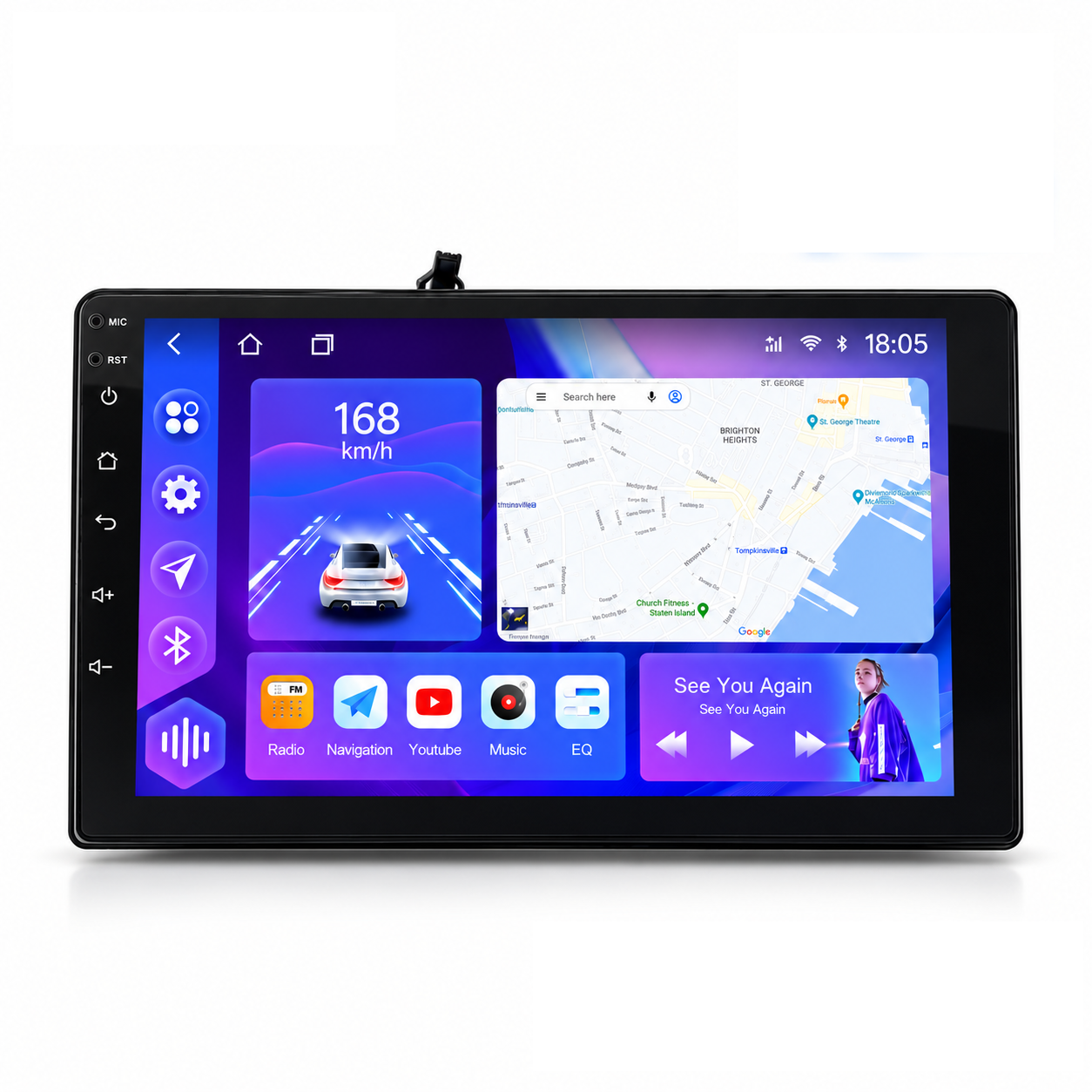
China is a major sourcing market for aftermarket Android car radios, also known as Android head units or Android car stereos. Buyers can find a wide range of products, from entry-level multimedia receivers to advanced, vehicle-specific infotainment systems.
However, finding an Android car radio supplier is relatively easy. Finding a reliable manufacturing partner that can consistently deliver compatible products, verified specifications, stable quality, and dependable after-sales support is considerably more challenging.
Two car radios may look almost identical in product photos while using different processors, display panels, software platforms, amplifiers, and vehicle interfaces.
For distributors, even a small difference in product quality or vehicle compatibility can lead to installation problems, customer complaints, warranty claims, and unexpected costs.
This guide explains how to evaluate an Android car radio manufacturer in China, what technical details to verify, which questions to ask, and how to compare suppliers before placing a wholesale or OEM/ODM order.
Quick Answer: How Do You Choose a Reliable Android Car Radio Manufacturer?
A reliable Android car radio manufacturer should demonstrate five essential capabilities:
- Vehicle compatibility: Provide accurate fitment information, compatible wiring harnesses, and CANBUS solutions where required.
- Verified hardware and software: Identify the actual processor, RAM, storage, Android version, display specifications, and supported features.
- Quality control: Demonstrate documented testing procedures for functionality, electrical performance, and product reliability.
- Transparent commercial terms: Clearly explain MOQ, pricing, customization costs, lead times, and included accessories.
- After-sales support: Supply technical documentation, appropriate firmware updates, troubleshooting assistance, and an agreed warranty process.
For wholesale buyers, a practical approach is to compare two or three suppliers using the same technical specifications, test physical samples, and confirm vehicle compatibility before placing a larger order.
The lowest unit price does not necessarily mean the lowest total purchasing cost.
The 8-Point Android Car Radio Manufacturer Checklist
Before selecting an Android head unit supplier in China, evaluate each candidate using the following checklist.
| Evaluation Criteria | What a Reliable Supplier Should Provide | Warning Signs |
|---|---|---|
| 1. Manufacturing capability | Clear explanation of assembly, testing, engineering, and production responsibilities | Cannot explain who manufactures, tests, or supports the products |
| 2. Vehicle compatibility | Confirmed vehicle applications, installation accessories, and interface requirements | Claims universal compatibility without checking vehicle details |
| 3. Hardware specifications | Verifiable chipset, RAM, ROM, display, and operating system details | Vague specifications or inconsistent product information |
| 4. Functional compatibility | Demonstrated CarPlay, Android Auto, audio, navigation, and camera functions | Features shown in advertisements cannot be demonstrated |
| 5. Quality control | Documented inspection standards and functional testing | No clear sample testing or defect-handling procedure |
| 6. Compliance documentation | Relevant, model-specific test reports and regulatory documentation | Generic certificates unrelated to the quoted product |
| 7. Samples and after-sales | Sample approval, warranty terms, firmware support, and spare-parts arrangements | Warranty promises without a practical support process |
| 8. Pricing and OEM/ODM | Detailed quotations, customization scope, MOQ, and delivery terms | Unclear accessories, extra charges, or changing specifications |
Practical recommendation: Give each category a score of 0–2.
- 0: No satisfactory evidence.
- 1: Partial information or unverified claims.
- 2: Clear, verifiable evidence.
A total of 16 points is possible. The score is a comparison tool, not a guarantee of reliability. A supplier with unresolved vehicle compatibility or serious quality-control concerns should not be approved for bulk purchasing solely because it scores well elsewhere.
1. Verify the Manufacturer's Actual Capabilities
One of the first questions overseas buyers ask is:
"Are you a real Android car radio manufacturer or a trading company?"
This question matters, but the distinction is not as simple as it may appear.
Android head units contain components sourced from multiple specialized manufacturers, including display panels, semiconductor chips, radio tuners, wireless modules, and automotive connectors.
Therefore, even an established manufacturer may purchase key components from external suppliers.
What matters is understanding which activities the supplier actually controls.
What Should You Verify?
Ask the potential supplier:
- Do you operate your own assembly and testing facilities?
- Which stages of production are completed in-house?
- Who develops or maintains the software and firmware?
- Can you support hardware troubleshooting and firmware-related problems?
- How do you manage component substitutions?
- Can you provide a live video demonstration of production and testing?
- Who is responsible for defects, repairs, and warranty claims?
A manufacturer with its own assembly, inspection, and technical support capabilities may offer better visibility into product consistency and problem resolution.
However, a competent trading company or sourcing partner can also add value, particularly when a buyer requires products from several different factories.
The real objective is not simply to eliminate middlemen. It is to identify who controls product quality, technical decisions, and after-sales responsibilities.
2. Confirm Vehicle Compatibility Before Comparing Prices
Vehicle compatibility is one of the most important differences between sourcing Android car radios and purchasing ordinary consumer electronics.
A car head unit may have the correct screen size but still be incompatible with a customer's vehicle.
Compatibility depends on more than vehicle brand and model.
Key Vehicle Information to Confirm
| Vehicle Detail | Why It Matters |
|---|---|
| Vehicle make and model | Identifies the target vehicle platform |
| Manufacturing year | Helps determine the dashboard and electronic system generation |
| Sales region | Regional versions may use different equipment or connectors |
| Dashboard configuration | Determines the required fascia, dimensions, and mounting system |
| Original radio version | Helps identify wiring and interface requirements |
| CANBUS system | May affect steering wheel controls and vehicle information |
| Factory amplifier | May require an additional interface or compatible audio output |
| Original camera and sensors | Determines whether retention adapters are needed |
For example, an Android car radio advertised for a Volkswagen model may not fit every vehicle sold under that model name.
The dashboard configuration, original infotainment system, connector type, and vehicle equipment can vary.
Similarly, a product intended for a base-trim vehicle may require additional adapters to work with a factory amplifier, steering wheel controls, or original reversing camera.
What Evidence Should You Request?
Before confirming a vehicle-specific order, ask for:
- Product and installation photographs.
- Compatible vehicle models and year ranges.
- Required wiring harness and CANBUS decoder details.
- Images of the supplied connectors and accessories.
- Confirmation of retained original functions.
- Installation instructions or videos, where available.
For unfamiliar vehicle applications, send the supplier photographs of the original dashboard, radio, and connectors.
Important: A product should not be advertised as plug-and-play until the required installation components and supported original functions have been confirmed.
Vehicle fitment is especially important for distributors supplying professional installation workshops, because incorrect compatibility information creates problems throughout the sales and installation process.
3. Verify the Real Hardware and Android System Specifications
Hardware specifications have a direct influence on product performance, navigation responsiveness, multitasking, audio processing, and the user experience.
However, impressive specification lists do not always tell the whole story.
A reliable Android head unit manufacturer should be able to explain the actual hardware configuration behind each quoted product.
Processor and Chipset
Android car radios may use different processor platforms depending on their performance level and target market.
When evaluating a chipset, consider:
- Exact processor model and architecture.
- Number and type of CPU cores.
- CPU operating frequency.
- RAM capacity and memory performance.
- Software optimization and thermal stability.
A higher CPU frequency or larger core count does not automatically guarantee better real-world performance.
Ask the supplier to demonstrate navigation, app switching, Bluetooth calls, and startup behavior on the actual proposed configuration.
RAM and Storage
The following memory combinations are illustrative quotation examples, not a Navlumo stock list or recommended minimum specifications:
| RAM + Storage | General Purchasing Consideration |
|---|---|
| 2GB + 32GB | Budget-oriented configurations; verify performance for required applications |
| 4GB + 64GB | A useful comparison point for mainstream multimedia and navigation requirements |
| 6GB + 128GB | More memory capacity for buyers requiring additional applications and multitasking |
| 8GB + 256GB | Higher-capacity configurations; verify that the processor and software justify the upgrade |
These are configuration examples, not universal performance rankings.
A well-optimized system with moderate memory may perform better than an inexpensive product advertising larger memory but using weaker components.
Always confirm the actual installed RAM and storage instead of relying only on promotional graphics.
Android Operating System
The Android version is another specification buyers should verify.
When a supplier advertises a particular Android version, request:
- An on-device software information screen, cross-checked against build/API information and the platform documentation; the displayed version label alone is not independent proof.
- The Android version and build details.
- The hardware platform or board identification.
- Information about available firmware updates.
- Confirmation of app compatibility and update procedures.
Avoid assuming that a higher advertised Android version automatically means better long-term support.
A verified, stable software build is generally more valuable than an attractive version number that cannot be independently checked.
Display Quality
Android car radios are available with different screen technologies, sizes, and resolutions.
Commonly advertised options include IPS and QLED-type LCD panels, with resolutions such as 1280 × 720, 1920 × 1080, or 2000 × 1200, depending on the product.
When comparing displays, evaluate:
- Native panel resolution.
- Brightness and readability in daylight.
- Viewing angles.
- Touch responsiveness.
- Color consistency.
- Operating stability at elevated temperatures.
Remember that the screen resolution is not the same as the resolution of the camera input or video playback.
Request a real product demonstration instead of judging display performance only from rendered marketing images.
4. Test CarPlay, Android Auto, and Other Essential Functions
Modern Android car radios often advertise a large collection of features. Buyers should confirm which functions are included, which require extra hardware, and which depend on the vehicle or connected smartphone.
Android OS vs Android Auto vs Apple CarPlay
These three terms describe different technologies.
Android OS: The operating system installed on the head unit itself, allowing the device to run compatible Android applications.
Android Auto: A smartphone projection system that brings supported Android phone applications to a compatible car display.
Apple CarPlay: Apple's in-car interface for using supported iPhone functions through a compatible car display.
An Android-powered head unit does not automatically guarantee Android Auto or Apple CarPlay support.
Wireless functionality also depends on compatible devices and connection requirements.
Buyers should test both wired and wireless functions where the product claims to support them.
For additional technical requirements, refer to Google's Android Auto guidance and Apple CarPlay information.
Other Functions Worth Testing
Bluetooth: Confirm connection stability, hands-free call quality, microphone performance, and the advertised Bluetooth version.
GPS navigation: Test positioning accuracy, satellite acquisition, and navigation behavior.
Wi-Fi and 4G connectivity: Verify the wireless features, required SIM functionality, and LTE bands for the destination market.
Radio reception: Check FM/AM tuning, regional frequency settings, and RDS functionality where required.
Audio and DSP: Confirm available equalizer controls, amplifier configuration, RCA outputs, and sound performance.
Steering Wheel Controls (SWC): Test the supported buttons through the intended wiring and CANBUS configuration.
Reversing Camera: Confirm supported video inputs, such as CVBS or compatible AHD formats, and test automatic switching when reverse gear is engaged.
For camera integration, an advertised AHD 1080P feature should be verified on the actual unit and camera combination.
A technically complete feature list is less valuable than a shorter list of functions proven to work reliably.
5. Evaluate Quality Control and Reliability Testing
Product reliability is particularly important for distributors who need consistent performance across repeated wholesale orders.
A sample that works correctly for ten minutes is not necessarily proof that the product will remain stable during everyday vehicle use.
Recommended Quality-Control Checks
A reliable supplier should be able to explain how products are tested for:
Electrical performance
Confirm that the head unit operates correctly within its specified input-voltage range and handles normal vehicle power-on and power-off conditions.
Startup and shutdown behavior
Test cold boot, standby recovery, ignition-related power transitions, and unexpected restarts.
Touchscreen and display functionality
Inspect the screen for visible defects, touch dead zones, brightness problems, and abnormal image behavior.
Audio performance
Check speaker outputs, channel balance, microphone input, radio reception, and relevant amplifier connections.
Connectivity and software
Test Wi-Fi, Bluetooth, GPS, supported phone projection features, and application stability.
Thermal reliability
Ask what operating-temperature and extended-running tests are performed for the specific product platform.
Camera and vehicle integration
Verify reverse-signal switching, compatible video formats, CANBUS functions, and supported vehicle controls.
Ask for Test Evidence, Not Just a Quality-Control Statement
Useful evidence may include inspection checklists, sample test videos, batch records, or reports for the relevant product model.
Buyers should also clarify the supplier's acceptance criteria for defects and the corrective actions used when problems occur.
Where relevant, agree on an inspection procedure before shipment.
A claim such as "100% tested" is not sufficient by itself. The supplier should explain what is tested, how it is tested, and how failed units are handled.
6. Check Product Compliance and Documentation
Different markets have different regulatory requirements for automotive electronics.
Depending on the destination, product configuration, radio functionality, and applicable regulations, buyers may need evidence relating to:
- CE marking and applicable EU legislation, including radio-equipment requirements where relevant.
- RoHS compliance for restricted substances.
- FCC equipment authorization or other applicable requirements for the United States.
- Electrical, electromagnetic compatibility, or radio testing relevant to the product.
- Importer documentation and labeling requirements.
Do not assume that every Android head unit requires exactly the same certification package.
Compliance depends on the product and the market.
A CE logo displayed on a product image is not sufficient evidence of conformity. For relevant products, request the applicable EU Declaration of Conformity and supporting documentation.
Likewise, an FCC-related claim should be checked against the relevant equipment and regulatory requirements.
When a supplier provides a test report, verify that the product model, manufacturer or applicant details, and described equipment correspond to the goods being purchased.
Buyers should confirm destination-country obligations before importing or selling the products.
7. Order Samples and Confirm After-Sales Support
Before placing a substantial wholesale order, evaluate the exact configuration you intend to sell.
Ideally, test a sample with the same processor, RAM, storage, display, software, and accessories specified in the commercial quotation.
Android Car Radio Sample Testing Checklist
During sample evaluation, verify the following:
- ☐ The unit matches the quoted hardware and software specifications.
- ☐ The screen operates normally without obvious touch or display defects.
- ☐ The supplied wiring harness and accessories match the agreed configuration.
- ☐ Bluetooth calls and audio functions work as expected.
- ☐ CarPlay and Android Auto work on supported phones where advertised.
- ☐ GPS, Wi-Fi, and optional cellular connectivity operate correctly.
- ☐ The reversing camera switches and displays correctly.
- ☐ Supported steering wheel controls and CANBUS functions operate correctly.
- ☐ The unit remains stable during extended operation.
- ☐ Installation instructions and relevant firmware information are available.
For vehicle-specific models, practical testing in a compatible vehicle is especially valuable.
After-Sales Questions to Ask
Ask the manufacturer:
- What is the warranty period for the quoted product?
- How are defective units diagnosed and documented?
- Can firmware files and update instructions be provided when appropriate?
- Are replacement parts available for supported product models?
- How are DOA (dead-on-arrival) units handled?
- What happens if a technical issue affects multiple units in the same batch?
- Who provides installation and software troubleshooting support?
Do not rely only on a general statement such as "one-year warranty."
The actual warranty scope, exclusions, labor responsibilities, shipping costs, and replacement process should be agreed upon in writing.
For distributors and installers, dependable technical support may be worth more than a small reduction in purchasing price.
8. Compare Wholesale Pricing, MOQ, and OEM/ODM Capabilities
When comparing Android car radio wholesale quotations, the cheapest offer may not contain the same hardware, software, or installation accessories as a competing quotation.
For example, two 9-inch Android head units may differ in:
- Processor and RAM configuration.
- Screen resolution and panel quality.
- GPS, Wi-Fi, and 4G capabilities.
- Audio amplifier and radio tuner.
- CarPlay and Android Auto support.
- CANBUS decoder and wiring harness.
- Vehicle-specific fascia and mounting accessories.
- Packaging, warranty, and technical support.
What Determines Android Car Radio Wholesale Prices?
The main pricing factors generally include hardware platform, memory, display, connectivity modules, vehicle-specific accessories, customization requirements, production quantity, and warranty or support arrangements.
A higher quoted unit price may include essential installation components that another supplier charges for separately.
Compare landed cost (goods, required accessories, freight and applicable import charges) separately from total ownership cost, which also includes installation rework, returns and support. Use a sellable-unit calculation only when its defect and return assumptions are stated.
What Is the Typical MOQ for Android Car Radios?
There is no universal MOQ for Android head units.
MOQ may differ between standard products, vehicle-specific models, customized packaging, and projects requiring dedicated hardware or software development.
Standard configurations may be available in smaller quantities, while extensive OEM/ODM projects can require larger production volumes.
Ask suppliers to confirm separate MOQs for samples, standard wholesale orders, private-label orders, and customized hardware.
Avoid treating an advertised low MOQ as proof of manufacturing capability.
What Can OEM/ODM Suppliers Customize?
Depending on the platform and project scope, customization may include:
- Startup logo and branding.
- Product packaging and manuals.
- Selected interface or launcher elements.
- Hardware configuration.
- Vehicle-specific wiring or installation accessories.
- Regional settings and supported functions.
- Customized software or additional hardware development.
Private-label customization and complete product development are different services.
Confirm whether engineering fees, tooling charges, software development costs, additional testing, or larger MOQs apply.
For more information, explore Navlumo's OEM/ODM automotive electronics solutions.
The 3-Supplier Comparison Method
Download the supplier comparison sheet (CSV). Record evidence, unresolved issues and quoted terms rather than checking a box based on a sales promise.
Rather than relying on a generic list of the "Top 10 Android Car Radio Manufacturers in China," create a consistent specification sheet and send it to three shortlisted suppliers.
Request quotations based on exactly the same requirements.
Step 1: Define Your Product
Specify the target vehicle, screen size, processor level, RAM, storage, operating system, phone connectivity, camera requirements, accessories, and quantity.
Step 2: Compare the Complete Offers
| Comparison Item | Supplier A | Supplier B | Supplier C |
|---|---|---|---|
| Verified hardware specifications | Check | Check | Check |
| Vehicle compatibility evidence | Check | Check | Check |
| Included harness/CANBUS/accessories | Check | Check | Check |
| Sample quality | Check | Check | Check |
| Quality-control documentation | Check | Check | Check |
| Compliance evidence | Check | Check | Check |
| MOQ and production lead time | Check | Check | Check |
| Total landed cost | Check | Check | Check |
| Warranty and technical support | Check | Check | Check |
Step 3: Test the Best Candidates
Order samples from the strongest candidates where practical.
Evaluate their real performance, fitment, included accessories, and technical documentation.
Compare how suppliers respond when you identify a technical problem during testing.
Step 4: Approve the Bulk-Order Specification
Before payment, confirm:
- Final product configuration.
- Hardware and firmware identification.
- Included components and packaging.
- Approved sample or reference standard.
- Quantity and inspection criteria.
- Delivery schedule and Incoterms.
- Warranty and defect-handling procedures.
A simple approval process can prevent expensive disagreements after production.
Common Mistakes When Sourcing Android Head Units
Mistake 1: Choosing based only on RAM and Android version
A larger memory configuration or newer advertised Android version does not guarantee better software stability.
Mistake 2: Assuming every unit fits all versions of a vehicle
Dashboard designs, wiring systems, original audio equipment, and vehicle generations can differ.
Mistake 3: Failing to confirm included accessories
A quotation without the required CANBUS decoder, fascia, or wiring harness may appear cheaper than the complete solution.
Mistake 4: Skipping vehicle installation tests
A bench test confirms some functions, but it cannot verify every vehicle-specific integration requirement.
Mistake 5: Ignoring technical support before purchasing
Poor troubleshooting support can become a significant cost when distributors need to resolve customer installation complaints.
The best sourcing decisions consider the complete product and service package rather than an isolated price or specification.
What Information Should You Send to an Android Car Radio Manufacturer?
Download the purchasing brief (TXT) and fill it in before requesting quotations.
A clear initial inquiry helps suppliers recommend the correct product and provide a more accurate quotation.
Use the following purchasing brief:
Product: Android Car Radio / Android Head Unit
Target market: Country or region where the product will be sold.
Vehicle application: Make, model, production year, original radio configuration, and dashboard photos.
Screen: Preferred screen size, panel type, and resolution.
Hardware: Required processor performance, RAM, and storage.
Connectivity: CarPlay & Android Auto, Bluetooth, GPS, Wi-Fi, optional 4G, and relevant regional requirements.
Vehicle integration: CANBUS, steering wheel controls, reversing camera, original amplifier, and other required retained functions.
Order quantity: Sample requirement and estimated wholesale volume.
Customization: Logo, packaging, interface, or OEM/ODM requirements.
Destination: Delivery country and preferred shipping terms.
Providing these details at the beginning of a sourcing project reduces unnecessary back-and-forth communication and makes it easier to compare different suppliers fairly.
Frequently Asked Questions
How can I find a reliable Android car radio manufacturer in China?
Start by shortlisting suppliers that offer your required vehicle applications and technical configurations. Verify their manufacturing responsibilities, inspect their quality-control process, request specifications and compatibility evidence, and test samples before placing a larger order. Compare at least two or three suppliers using the same requirements.
Is an Android car radio manufacturer better than a trading company?
Not necessarily. A manufacturer may provide more direct control over assembly, testing, and product support, while a capable trading company can coordinate multiple specialized suppliers. Buyers should evaluate technical capability, transparency, product consistency, and accountability rather than relying only on the supplier's business classification.
What is the difference between an Android car radio and Android Auto?
An Android car radio is an aftermarket multimedia head unit that runs an Android-based operating system. Android Auto is a smartphone projection system that displays supported Android phone functions on a compatible vehicle screen. An Android head unit does not automatically support Android Auto unless that function is provided.
What specifications matter most when buying Android head units in bulk?
The most important specifications depend on the target market and application. Buyers should verify processor, RAM, storage, display quality, operating system, audio hardware, connectivity features, vehicle interfaces, and required accessories. Vehicle compatibility and software reliability are especially important for wholesale distribution.
How much does an Android car radio cost wholesale in China?
Wholesale pricing depends on the hardware platform, memory, display, connectivity, vehicle-specific accessories, order volume, and customization requirements. The most reliable way to compare prices is to request multiple quotations using identical specifications and calculate the full landed cost rather than comparing unit prices alone.
Can Android car radio manufacturers provide OEM and ODM services?
Many suppliers offer some level of customization, such as private labeling, startup logos, packaging, or selected software and hardware changes. More extensive development may require engineering fees, validation, and higher minimum order quantities. Buyers should confirm the available customization scope before ordering.
How do I verify Android car radio compatibility with my vehicle?
Provide the supplier with the vehicle make, model, year, sales region, original dashboard photos, and information about the factory radio. Confirm wiring harnesses, CANBUS interfaces, mounting accessories, and retained original functions. For unfamiliar applications, perform an installation test with the intended vehicle configuration.
What should I check before placing a bulk Android head unit order?
Confirm the approved sample, final hardware and firmware specifications, vehicle compatibility, accessories, testing standards, warranty terms, MOQ, delivery schedule, payment terms, and responsibilities for defective products. Keep these details in the approved quotation or purchase agreement.
Looking for an Android Car Radio Manufacturing Partner in China?
Selecting the right supplier is about more than getting a competitive price. It is about building a dependable product range that meets your customers' expectations and supports your long-term business.
At Navlumo, we focus on aftermarket automotive electronics for international distributors, wholesalers, installers, and brand owners.
Our product range includes Android car head units, CarPlay displays, vehicle cameras, and other automotive electronics, with product selection and OEM/ODM support for different market requirements.
We recommend starting with your target vehicles, preferred specifications, and expected order quantity so that the appropriate configuration and installation requirements can be reviewed.
You are welcome to compare our quotation with other suppliers before making a purchasing decision.
Explore Our Automotive Electronics Products
Request an Android Car Radio Quotation
Tell us your target vehicle models, required features, destination market, and quantity. We can discuss suitable product options, compatibility requirements, samples, and customization needs.
Official References and Further Reading
- Google: Android Auto compatibility and setup requirements. Check the current phone, vehicle and connection requirements.
- Apple: CarPlay overview. Use this to distinguish phone projection from the Android operating system installed on a head unit.
- European Union: CE marking guidance. Review the applicable conformity assessment and declaration requirements.
- FCC: Equipment authorization guidance database. Check the relevant equipment and radio configuration with a qualified compliance provider.
Requirements depend on the product, radio configuration and destination market. These references do not establish that any particular Navlumo model is certified.